10 Habits to Improve Your Healthspan
By Dr. Jushitha Chowdary N, MBBS, PGDFM, FDM
Family Physician | Diabetes Care Specialist | Lifestyle & Longevity Medicine, 150.fit
Healthspan Is About More Than Living Longer
Most people think about ageing in terms of one question:
How long will I live?
A better question is:
How many of those years will I spend healthy, strong, mobile and independent?
That is your healthspan — the period of life spent in good health and functional independence.
It is the difference between simply adding years to life and being able to:
- Climb stairs comfortably
- Travel independently
- Get up from the floor without assistance
- Maintain strength and balance
- Think clearly
- Stay socially engaged
- Continue doing the things you enjoy
The encouraging part is that many of the habits associated with healthier ageing are simple. They are not necessarily new or glamorous — they are the fundamentals that work when practised consistently.
1. Strength Train at Least Twice a Week
Muscle is not just about appearance.
It plays an important role in:
- Mobility
- Balance
- Bone health
- Glucose regulation
- Metabolic health
- Maintaining independence with age
From midlife onwards, muscle mass gradually declines, and strength may decline even faster.
What This Can Look Like
Aim for 2–3 resistance-training sessions per week, depending on your current fitness and health.
Focus on basic movement patterns:
- Squat
- Hinge
- Push
- Pull
- Carry
Your resistance should gradually become more challenging as you get stronger.
You do not need an elaborate gym programme. Dumbbells, machines, resistance bands and body-weight exercises can all work.
Add Balance Training
Balance is also trainable.
A simple daily habit can be:
30 seconds of single-leg balance on each side.
Even small amounts of regular balance work can help maintain stability with age.
2. Build Your Aerobic Fitness
Cardiorespiratory fitness is strongly associated with long-term health.
You do not need to spend every workout exercising at maximum intensity.
The foundation should be regular aerobic movement.
Good Aerobic Options
Choose activities you can sustain consistently:
- Brisk walking
- Cycling
- Swimming
- Jogging
- Hiking
- Dancing
- Rowing
A simple test for moderate aerobic exercise:
You should be able to speak, but not comfortably sing.
Where medically appropriate, occasional higher-intensity exercise can also be added.
Practical Goal
Build a combination of:
regular moderate aerobic exercise + occasional higher-intensity work
rather than relying only on one type of cardio.
3. Break Up Long Periods of Sitting
Exercise is important, but it does not make the rest of the day irrelevant.
Long periods of uninterrupted sitting can negatively affect glucose regulation and blood pressure, even in people who exercise regularly.
Simple Ways to Move More During the Day
- Stand or walk every 30–45 minutes
- Take calls while standing
- Use the stairs when practical
- Walk instead of driving short distances
- Take brief movement breaks during work
- Walk after meals
Try a 10-Minute Post-Meal Walk
A short walk after your larger meals is one of the simplest ways to add movement to the day.
The goal is not to make every movement session a workout.
It is to avoid spending most of the day completely sedentary.
4. Eat Enough Protein to Maintain Muscle
Protein becomes increasingly important as we age because preserving muscle gets harder.
Your protein requirement depends on:
- Body weight
- Age
- Activity level
- Training
- Health conditions
- Overall energy intake
The source article recommends paying particular attention to protein intake and distributing it across meals instead of consuming most of it at dinner.
Good Protein Sources
Vegetarian
- Dal
- Rajma
- Chana
- Soya
- Tofu
- Paneer
- Milk
- Curd
- Nuts and seeds
Non-Vegetarian
- Eggs
- Fish
- Chicken
- Other lean animal proteins
Practical Rule
Ask at each main meal:
Where is my protein source?
For vegetarians in particular, protein intake may need more deliberate planning because many plant foods are less protein-dense.
People with chronic kidney disease or other conditions affecting protein requirements should individualise intake with their clinician.
5. Eat a Wider Variety of Plant Foods
Healthy eating is not about identifying one perfect vegetable, grain or “superfood.”
Variety matters.
Different plant foods provide different combinations of:
- Fibre
- Vitamins
- Minerals
- Polyphenols
- Other plant compounds
The original article uses 30 different plant foods per week as a practical target for dietary diversity.
This can include:
- Vegetables
- Fruits
- Lentils
- Beans
- Whole grains
- Nuts
- Seeds
- Herbs
- Spices
What This Might Look Like
Across one week:
- Different dals
- Several colours of vegetables
- Leafy greens
- Seasonal fruits
- Nuts and seeds
- Whole grains
- Herbs and spices
- Fermented foods such as curd
The exact number is less important than the principle:
Aim for diversity, not dietary monotony.
At the same time, reduce the proportion of your diet coming from heavily ultra-processed foods.
6. Treat Sleep as a Health Priority
Sleep is not wasted time.
It supports:
- Memory
- Mood
- Metabolic regulation
- Recovery
- Cardiovascular health
- Cognitive function
Consistently inadequate or irregular sleep is associated with poorer long-term health outcomes.
How Much Sleep Should You Aim For?
For most adults:
Approximately 7–9 hours per night
Consistency matters too.
Try to keep your sleep and wake times reasonably regular.
Improve Your Sleep Environment
Helpful habits may include:
- Keeping your bedroom dark
- Keeping it comfortably cool
- Limiting caffeine later in the day
- Avoiding heavy alcohol intake close to bedtime
- Maintaining a consistent sleep schedule
Still Tired After a Full Night's Sleep?
That deserves attention.
Persistent fatigue may sometimes be related to:
- Obstructive sleep apnoea
- Iron deficiency
- Thyroid dysfunction
- Depression
- Other sleep or medical disorders
Do not assume every case of fatigue simply needs more caffeine.
7. Reduce Alcohol and Avoid Tobacco
Alcohol should not be consumed because you believe it is necessary for health.
Current evidence does not support treating alcohol as a health-promoting intervention.
If you drink, it is worth being realistic about the trade-offs.
Reducing alcohol may also improve:
- Sleep
- Recovery
- Energy
- Calorie intake
Tobacco Is Different
There is no health benefit to smoking.
Avoid:
- Cigarettes
- Cigars
- Smokeless tobacco
- Other tobacco products
Reducing tobacco exposure remains one of the most important preventive-health measures available.
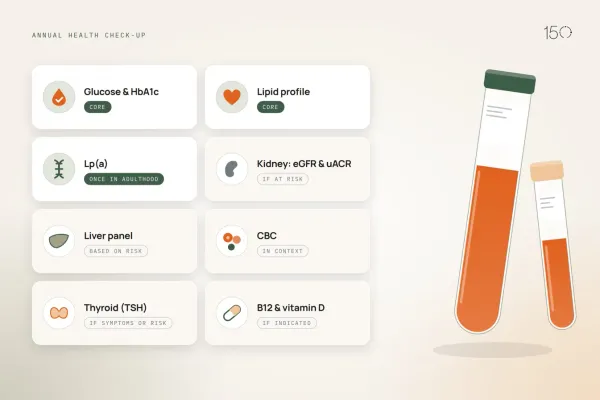
8. Know Your Health Numbers Before Symptoms Appear
Many of the conditions that eventually shorten healthspan develop silently for years.
These include:
- High blood pressure
- Insulin resistance
- Atherosclerosis
- Dyslipidaemia
- Osteoporosis
Waiting for symptoms can mean losing valuable time for prevention.
Useful Health Measures May Include
Depending on your age, sex, history and risk profile:
Blood Pressure
Ideally measured correctly and, where appropriate, at home as well as in the clinic.
Glucose Markers
Such as:
- Fasting glucose
- HbA1c
Lipids
Your doctor may assess standard lipids and additional cardiovascular markers where clinically appropriate.
Waist Circumference
Useful because central fat distribution can provide information that weight alone does not.
Nutritional and Hormonal Markers
Depending on symptoms and clinical context:
- Ferritin
- Vitamin B12
- Vitamin D
- Thyroid markers
Bone Health
Bone-density testing may be appropriate based on age, menopause status and other risk factors.
The principle is not:
“Do every possible test.”
It is:
“Measure what is relevant enough to change a decision.”
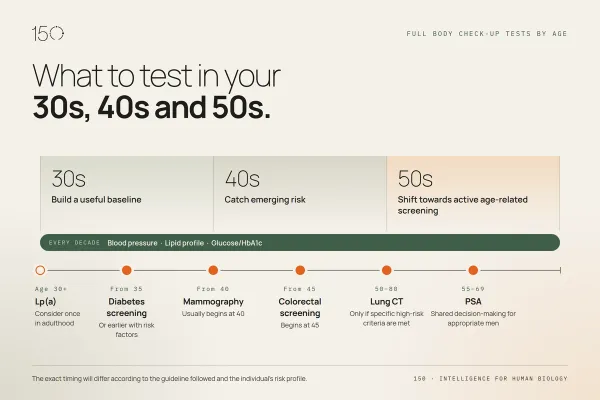
9. Stay Up to Date With Preventive Screening
Preventive screening is one of the less glamorous parts of healthspan — but one of the most important.
Appropriate screening varies according to:
- Age
- Sex
- Family history
- Personal risk
- Country-specific recommendations
It may include:
- Breast cancer screening
- Cervical cancer screening
- Colorectal cancer screening
- Eye checks
- Hearing assessments
- Vaccinations
- Other risk-based testing
The source article also highlights hearing because untreated hearing loss can significantly affect communication and quality of life.
Speak to your physician about the screening schedule that applies to you rather than following a generic list.
10. Invest in Relationships and Purpose
Healthy ageing is not purely biological.
Social connection matters.
Strong relationships are consistently associated with better health outcomes, while prolonged loneliness and social isolation are associated with poorer physical and mental health.
What This Can Look Like
- Regular time with family
- Meeting friends in person
- Shared meals
- Community involvement
- Group activities
- Volunteering
- Maintaining hobbies
- Having meaningful responsibilities
Relationships often require scheduling, just like exercise.
Protect that time deliberately.
A sense of purpose — having something you care about, contribute to or work towards — is also an important part of healthy ageing.
What About Supplements, Saunas, Wearables and Longevity Trends?
The longevity industry offers no shortage of options:
- Supplements
- Cold plunges
- Saunas
- Fasting protocols
- Wearables
- Extensive health testing
Some may be useful in the right context.
But they should come after the fundamentals, not before them.
Supplements
Supplements are most useful when they address a documented deficiency or a defined nutritional need.
Examples may include:
- Vitamin D
- Vitamin B12
- Iron
- Omega-3
- Magnesium
The decision should ideally be based on diet, symptoms, medical history and relevant testing rather than advertising.
Wearables
Wearables can help track:
- Activity
- Sleep
- Heart rate
- Exercise patterns
But the data only becomes useful if it changes behaviour.
Advanced Testing
More testing does not automatically mean better preventive care.
A test is most valuable when:
the result is interpretable + clinically relevant + actionable.
Where Should You Start?
Do not attempt to change all ten habits in one week.
Choose the area where you are currently furthest behind.
For many people, that might be:
Strength training
Protein intake
Sleep
Daily movement
Start with one.
Practise it consistently until it requires less effort.
Then add the next.
The original article's central point is worth keeping: the value of these habits comes from how they compound over decades, not from executing everything perfectly for a few weeks.
10 Healthspan Habits at a Glance
| Habit | Practical Focus |
|---|---|
| 1. Strength training | 2–3 sessions per week |
| 2. Aerobic fitness | Regular moderate cardio + appropriate higher-intensity work |
| 3. Daily movement | Break up sitting and walk after meals |
| 4. Protein | Include a protein source at each main meal |
| 5. Plant diversity | Eat a wider range of whole plant foods |
| 6. Sleep | Aim for consistent, adequate sleep |
| 7. Alcohol & tobacco | Reduce alcohol; avoid tobacco |
| 8. Health markers | Track clinically relevant risk factors |
| 9. Screening | Keep age- and risk-appropriate screening up to date |
| 10. Relationships | Protect social connection and purpose |
Improving your healthspan does not usually start with a complicated longevity protocol.
It starts with the fundamentals:
Build strength.
Keep moving.
Maintain your aerobic fitness.
Eat enough protein.
Eat a varied diet.
Sleep properly.
Avoid tobacco.
Know your health risks.
Keep up with preventive care.
Stay connected to people.
You do not need to fix everything at once.
Start with the habit that needs the most attention, practise it consistently, and then build from there.
Healthy ageing is rarely the result of one dramatic intervention.
It is usually the result of simple behaviours repeated long enough to compound.
Medical Disclaimer
This article is for general education and does not replace individual medical advice. Exercise, protein intake, screening and preventive-health recommendations should be individualised according to age, medical history, medications, fitness level and existing health conditions.